
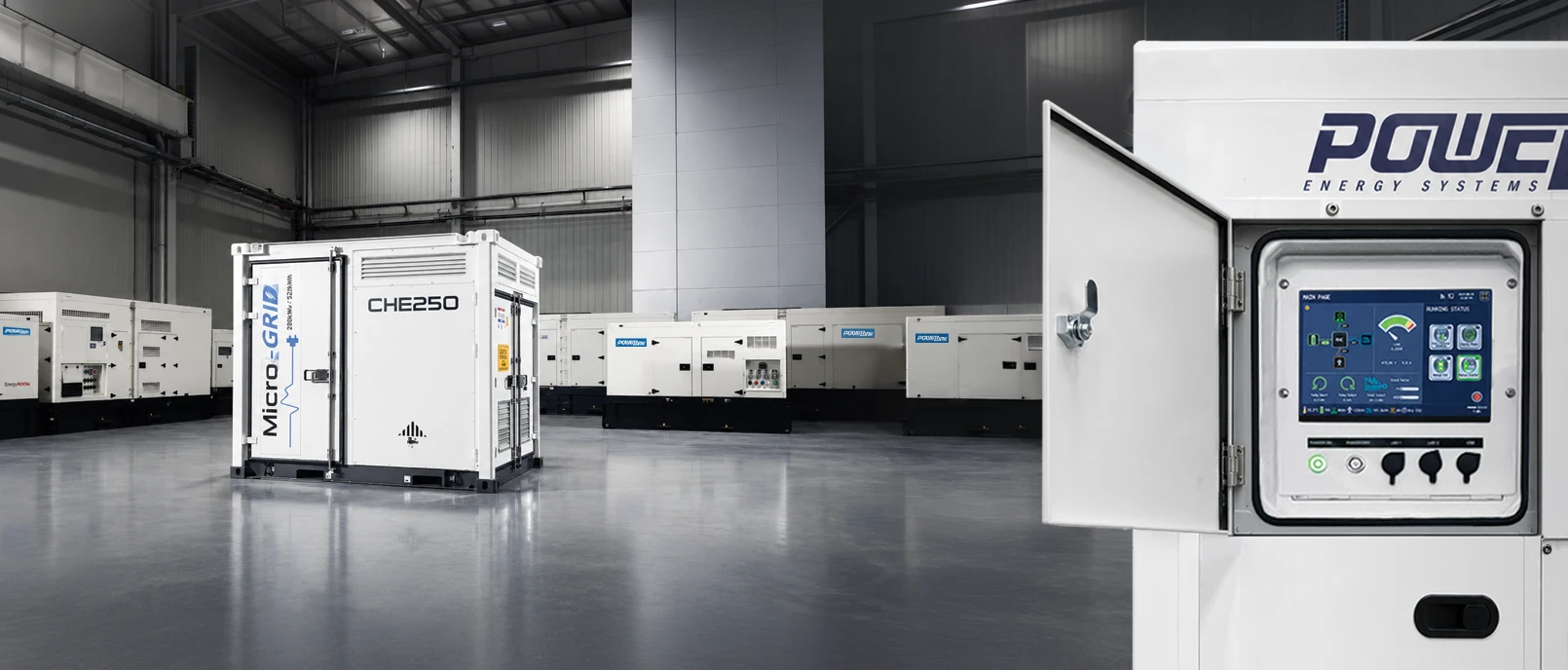
The energy landscape for Australian Commercial and Industrial (C&I) operations has fundamentally shifted. For decades, the standard playbook was simple: rely on the National Electricity Market (NEM) for primary power and keep diesel generators on standby for emergencies. However, with the rapid retirement of aging coal fleets, escalating evening peak pricing, and the sheer volatility of the modern grid, this static model is no longer financially or operationally optimal.
Today, Battery Energy Storage Systems (BESS) are moving out of the experimental phase and firmly cementing themselves as the anchor of the modern industrial energy strategy across Australia.
By the Numbers: The Market Reality of C&I Storage in Australia
The transition toward intelligent energy storage is not merely a sustainability initiative; it is a hard-nosed financial decision driven by unprecedented market economics. By 2025, Australia officially became the third-largest utility-scale battery market in the world—sitting only behind China and the US. Recent data highlights exactly why Australian businesses are rushing to adopt hybrid BESS architectures:
- Massive Capacity Growth: Large-scale battery capacity in Australia surged by 233% in 2025, with over $4.8 billion in financial commitments. The C&I sector is heavily contributing to this, utilizing behind-the-meter storage to shield operations from grid exposure.
- Cost Compression: Turnkey BESS utility-scale costs fell by 20% through 2025 alone. As global supply chains stabilize and local deployment scales up, the financial barrier to entry for businesses has plummeted.
- Scaling Up Business Capacity: The size of C&I deployments is actively growing. Recent data from the Clean Energy Regulator shows the average business battery installation jumping in capacity quarter-over-quarter, with systems in the 45–500 kWh range becoming the standard for light commercial, and multi-megawatt LFP (Lithium Iron Phosphate) systems dominating heavy industry.
The Australian Hybrid Advantage
We have reached a critical inflection point where the cost of inaction exceeds the cost of transition. For Australian businesses, adopting a hybrid energy model—one that intelligently integrates NEM connections, on-site solar, robust BESS, and reliable traditional power units—offers unparalleled operational resilience.
The Hybrid Advantage: A true hybrid architecture does not mean abandoning traditional power entirely; it means optimizing it. By placing a BESS at the center of your facility’s energy network, you can digitally orchestrate exactly how and when power is consumed, stored, or generated to navigate the complexities of the Australian grid.
Here is how BESS is solving the biggest energy challenges for Australian C&I operations today:
1. Dodging NEM Volatility and Peak Demand Charges
The “duck curve” is a daily reality in Australia. While daytime electricity prices frequently plunge into negative territory due to massive solar saturation, evening peak prices spike dramatically. A highly responsive BESS enables automated peak shaving and energy arbitrage. By charging the battery when power is cheap (or free) during the day and discharging it during the expensive evening peak, facilities can drastically cut their network demand charges and overall utility spend.
2. Maximizing ROI on the Commercial Solar Boom
Australia leads the world in per-capita rooftop solar, but commercial solar generation rarely aligns perfectly with an industrial facility’s operational load profile. A hybrid BESS captures excess midday generation that would otherwise be exported to the grid for pennies. By load-shifting this generated power to cover the evening shift, businesses radically improve their self-consumption rates and ensure zero wasted energy.
3. Optimizing Firming and Backup Power
In regional areas, edge-of-grid locations, or heavy industrial backup scenarios, running traditional diesel generation continuously at variable loads is highly inefficient. A hybrid model allows prime-power units to run at their absolute optimal, most fuel-efficient load strictly to charge the BESS. Once charged, the generator shuts down, allowing the site to run cleanly and silently on battery power—slashing diesel consumption and extending maintenance cycles.
Moving from Sunk Cost to Active Asset
Historically, industrial backup power in Australia was viewed as a sunk cost—an expensive insurance policy that sat idle waiting for a blackout. Behind-the-meter battery storage flips this narrative entirely.
An intelligent C&I BESS is a dynamic, active asset that works every single day to lower your operational expenditure, interact with the grid, and even generate revenue through frequency control ancillary services (FCAS). With system deployment timelines shrinking and the levelized cost of storage (LCOS) dropping to incredibly competitive rates, the financial friction of adoption has been virtually eliminated.
The era of choosing between operational reliability and energy cost-efficiency is over. For Australian facilities looking to future-proof their infrastructure, take control of their utility costs, and guarantee power security, the hybrid energy model is the definitive solution.