
If you own a solar power system, you’ve probably wondered: do solar panels actually need cleaning, or do rain and wind take care of it? The short answer is yes — solar panels need regular cleaning, especially on construction sites, farms, mine sites, or any property near dust, dirt, or unsealed roads. And it’s not just the panels. Keeping your solar battery storage system well maintained is just as important for getting the most out of your investment. Here’s what actually affects solar performance, and the fastest, safest way to fix it.
Does Dust Reduce Solar Panel Efficiency?
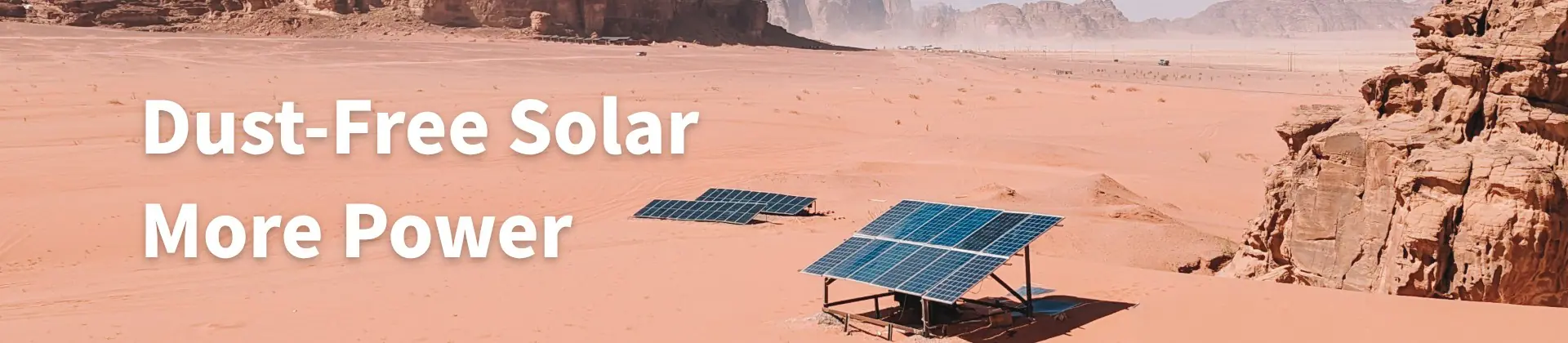
Yes, dust is one of the biggest hidden causes of solar panel efficiency loss. Every dust particle on a panel blocks a small amount of sunlight, and once a full layer builds up, the panel can’t convert as much sunlight into usable power. A light dust layer after a windy week is minor. A thick coating of construction dust, cement dust, pollen, or sand after a dry spell can cause a real, measurable drop in energy output, and that loss shows up directly on your power bill or your site’s energy monitoring.
This is especially true for ground-mounted and portable solar systems, which sit close to the ground where dust gets kicked up by trucks, machinery, and wind. Just like a windscreen collects road grime, a solar panel collects airborne dust — but a panel has no wipers to clear it.
Dust build-up doesn’t just cost you power output today. Left unmanaged, it can also affect the long-term return on investment (ROI) of your solar and battery system, since lower generation means your solar battery has less clean energy to store and use.
How Often Should Solar Panels Be Cleaned?
There’s no single answer for every site, but a simple rule works well: check your panels visually once a month, and clean them as soon as you notice a visible dust layer or a drop in output compared to a clean, sunny day.
- Dry, dusty regions or work sites: every 1–2 weeks
- Cleaner suburban or coastal areas: roughly once a month
- After a dust storm, bushfire smoke event, or long dry spell: an extra clean, regardless of schedule
Building solar panel cleaning into a regular maintenance routine — alongside checks on your solar battery storage system — helps protect your system’s efficiency and lifespan year-round.
Can You Pressure Wash Solar Panels?
This is one of the most common solar maintenance questions, and it deserves a careful answer: no, high-pressure washing is not recommended for solar panels. The seals around the panel frame aren’t built for high-pressure jets, water can be forced into electrical connectors, and on some panel types the pressure can crack or stress the glass. Even if nothing fails immediately, repeated pressure washing adds wear over time and can shorten the panel’s working life.
If you do need to use water, stick to these solar panel cleaning best practices:
- Use low water pressure only
- Clean with a soft brush or cloth
- Use plain water — avoid harsh chemicals or detergents
- Never use a pressure washer at close range
- Clean early morning or late afternoon, since cold water on hot glass can cause thermal shock
Can You Clean Solar Panels Without Water?
Yes, and on many sites, waterless cleaning is actually the better solar maintenance method. Water isn’t always available on remote or off-grid job sites, and trucking it in just for panel cleaning adds unnecessary cost. This is where compressed air cleaning comes in.
An air compressor fitted with a blowgun clears dust off the panel surface quickly, with no water, no streaks, no chemical residue, and no risk of scratching the glass. Better still, an air compressor is a tool most construction, mining, and off-grid sites already own, the same unit that runs pneumatic tools, inflates tyres, and clears filters can also keep your solar array clean in minutes. It’s genuinely a two-in-one investment for any solar-powered site.
How to Clean Dust Off Solar Panels With an Air Compressor
The process is straightforward, and a few good habits keep it safe for both you and your equipment:
- Use a low pressure setting — you don’t need full force to lift dust
- Fit a wide blow nozzle to spread airflow evenly across the panel
- Work from the top down, letting dust fall away rather than pushing it between panels
- Keep a sensible distance between the nozzle and the panel surface
- Clean when the surface is dry, since wet dust turns to mud and just gets moved around
- Treat stuck-on marks like bird droppings or mud separately, with a soft cloth and clean water after blowing off loose dust
Why Are My Solar Panels Not Producing Enough Power?
Dust is the first thing to check, but it’s not the only cause of poor solar output. Run through this quick solar troubleshooting checklist:
- Is the surface dirty? The most common cause of gradual power loss, and the easiest to fix
- Is something shading the panels? New equipment, stacked materials, a parked vehicle, or overgrown vegetation can block sunlight without being obvious
- Are the electrical connections sound? Check cables and connectors after storms or site work
- Is one panel underperforming? A single faulty panel can drag down an entire string — compare per-panel data if your monitoring system supports it
- Is weather the real cause? Cloud cover, haze, and shorter winter days all reduce solar generation — always compare against a known clean, sunny-day baseline first
If your panels are clean, unshaded, and properly connected but output is still low, it’s worth having your solar battery and inverter setup checked by a technician, since storage or conversion issues can also affect how much usable power you get.
How to Keep Dust Off Solar Panels Long-Term
You can’t stop dust from settling, but you can reduce how much builds up:
- Position matters — where possible, install panels away from gravel roads, stockpiles, and loading areas that constantly stir up dust
- Tilt angle helps — a steeper tilt lets rain naturally wash more of the panel surface and reduces dust settling
- Add cleaning to your maintenance schedule — build panel cleaning into a weekly or fortnightly site checklist so it happens proactively, not reactively
- Keep the surrounding area tidy — less loose dirt near the array means less dust landing on the glass
The Bottom Line on Solar Panel and Battery Maintenance
Solar panels don’t need daily attention, but they do need regular cleaning, especially on dusty or remote sites. The cost of ignoring dust build-up is quiet but constant: reduced power generation every single day, and less clean energy available to charge your solar battery. The cost of staying on top of it is just a few minutes with the right tool. If your site runs on a solar power pack, pairing it with an air compressor gives you a fast, low-cost, waterless way to protect your system’s output. Talk to our team about the right solar and battery setup for your site, and get a maintenance routine tailored to your local conditions.
Get in Touch with Our Engineers & Energy Specialists
Website: powerlinkenergy.com.au
Phone: (02) 8858 9688
Email: info@powerlinkenergy.com.au
NSW Head Office: 6/113 Woodpark Rd, Smithfield NSW 2164
WA Branch Office: 1685 Albany Hwy, Kenwick WA 6107